
-
0:00/6:20
-
Earthstar: Billows 4:520:00/4:52
-
0:00/6:54
EARTHSTAR
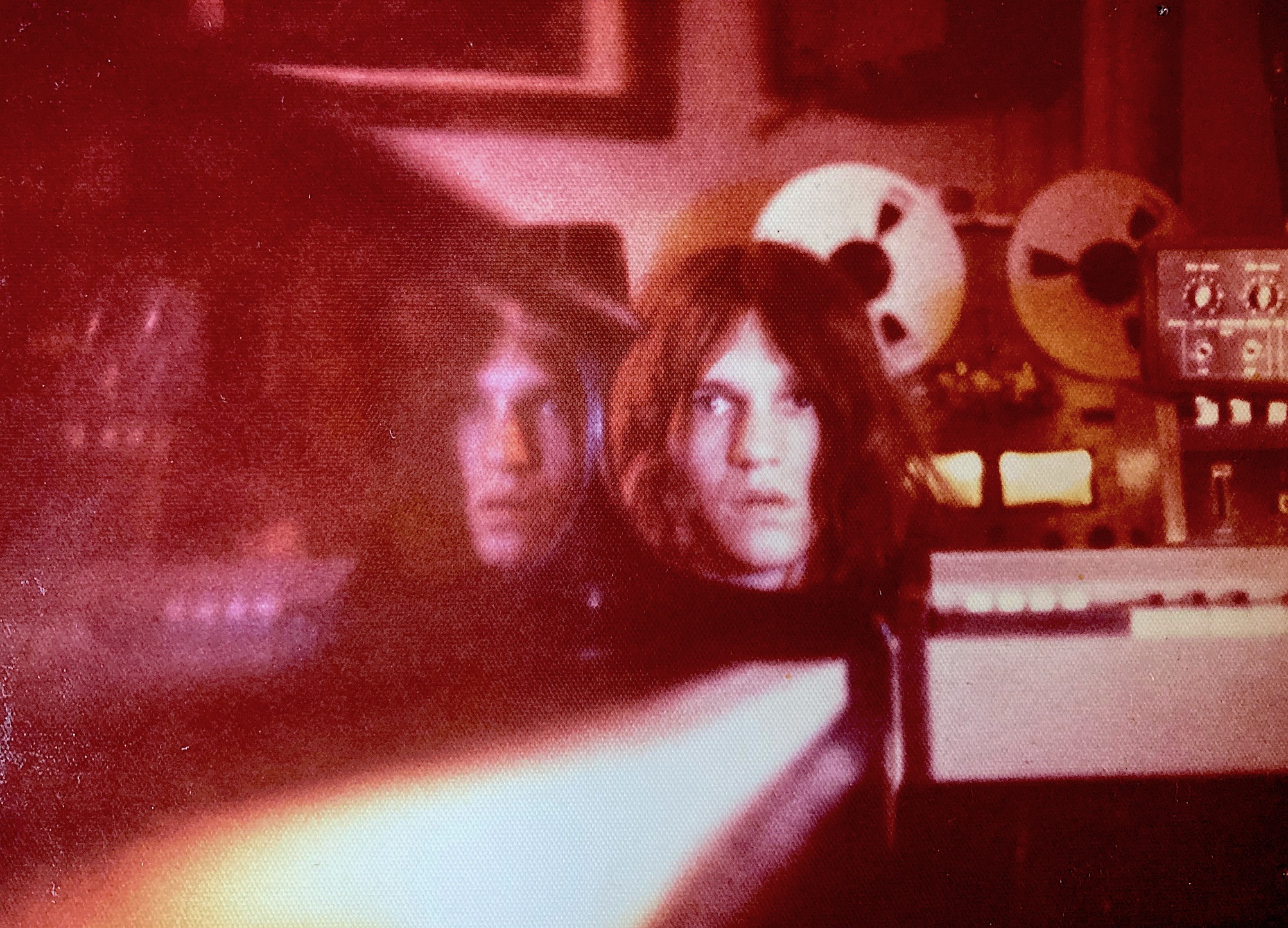
Earthstar founder Craig Wuest in 1977
earthstar
 |
 |
 |
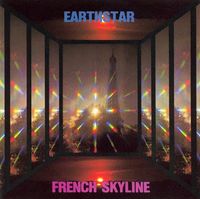 |
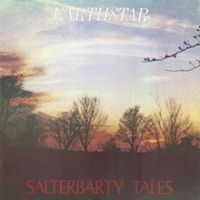 |
news
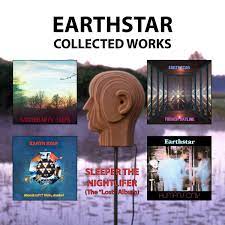
In late 2023, German label MiG Music reissued Earthstar's entire recorded catalog as a five-disc box set - including the “lost” Earthstar album Sleeper The Nightlifer - over 40 years after the initial releases, and 30-some years since the band had last heard from Sky Records, who'd originally issued three of the titles and whose founder had passed away in 1990. Imagine our surprise when shortly after the 2023 reissue, MiG and the band were served a cease-and-desist order from a law firm claiming to represent Sky, forcing MiG to remove all physical and online copies of the three albums (but not the other two) from circulation. Earthstar is contesting Sky's dubious claim given the decades-long lapse in communication and royalty payments and zero effort to re-release the titles on the label's part. While the dispute plays out, only Salterbarty Tales and Sleeper remain available to stream and download. Watch this space for further developments in a saga that's sadly all too typical of the music industry.
Collected Works • MiG Music • 2023
See above - only Salterbarty Tales and Sleeper The Nightlifer are currently available, from various streaming/download platforms.
members
core members
- Craig Wuest (founder, composer, keyboards, percussion, miscellaneous instruments)
- Daniel Zongrone (drums, vibraphone, piano, keyboard, composer)
- Dennis Rea (guitar, piano, zither, composer)
- Dan Hapanowicz (guitar, percussion, producer, engineer, composer)
- Tim Finnegan (flute)
contributors
- Klaus Schulze (producer, engineer)
- John Bunkfeldt (producer, engineer, electronics)
- Richard Hooker (synthesizer)
- Norm Peach (bass)
- Daryl Trivieri (electric violin)
- Martin Burdett Martinez (guitar)
- Eberhard Panne (engineer)
- Rainer Böhm (violin)
- Louis Deponté (violin, loops, electronics, engineer)
- Anne Hacker (flute)
- Christoph Lagemann (cello)
- Phil Novak (violin)
- Dirk Schmalenbach (sitar)
- Marla Thompson (French horn, flute)
- Melanie Coiro (bells, percussion)
- Kathy Fusco (flute)
- John Leogrande (congas)
- Bob Mishalanie (drums)
- Andy Retscher (bass, synthesizer, Birotron)
- Mark Rowe (saxophone)
- Larry Smith (vibraphone)
- Vocals: Sara Burdette, Larsine Greene, Mark Magnet Kinsinger, Joan Novak, Phil Novak, Meredith Salisbury, Marla Thomson, Craig Wuest)
-
Additional engineers: Gert Anders, Baffo Banfi, Andy Retscher, Bob Yeager
Earthstar: A personal recollection by Dennis Rea
(liner notes for currently out of print (but contested) box set Earthstar: Collected Works)
Here follows the improbable tale of how an obscure young band from upstate New York became one of the very few American participants in Germany’s fabled “cosmic music” scene of the 1970s.
Origins
The story begins in the small city of Utica, where its protagonists grew up during the 1960s and ’70s. A once-thriving manufacturing hub on the banks of the Mohawk River roughly two-hundred miles northwest of New York City, in our day Utica was an agreeable, leafy town justly noted for its splendid historical architecture and bucolic surroundings reminiscent of the English countryside – a right pleasant place to pass one’s youth.
It was here that a number of neighborhood friends and schoolmates formed an unusually tight bond that persists to this day. Foremost among our shared interests was a love of music; even in our teens, we sensed that we were living in an extraordinarily inventive period for music worldwide, a creative blossoming that arguably hasn’t been matched since.
Like most white kids of our generation, our musical awareness was rooted in the Beatles, then led inexorably to Hendrix and other pillars of classic rock. Though we’d been born a few years too late to take the full thrill ride, as teens in the early 1970s we eagerly embraced the prevailing hippie ethos, sprouting long hair, sporting paisley garb, backpacking and hitchhiking, and yes, engaging in headlong exploration of psychedelics. It was probably the latter that propelled us toward ever stranger musical offerings, the weirder, the better. Encounters with early records by The Pink Floyd and King Crimson ignited a lifelong ardor for more adventurous music, as we obsessively mined record bins for hard-to-find imports by the likes of Van der Graaf Generator and Matching Mole. It wasn’t long before we started exploring the crossover electronic music of Terry Riley, Wendy Carlos, Isao Tomita, Morton Subotnick, and a growing number of artists and groups from Germany.
Inevitably, some of us took up instruments and formed our earliest bands, including in my case the quizzically named Zuir, a co-equal tripod whose other legs were bassist Norm Peach and drummer/vibraphonist Daniel Zongrone. Despite bearing all the blemishes and unearned arrogance of youth, Zuir evolved into a unit capable of producing genuinely interesting original music. Zuir would directly and indirectly shape its members’ future lives in pivotal ways, a long way in both time and distance from Utica – in Seattle, New York City, China, Siberia, and as we’ll see, Germany.
Our circle of Utican associates grew into an alliance of curious musicians, visual artists, and psychonauts who shared a certain late-hippie ethos spiced with a dash of Dada weirdness. None was more fascinating or talented than Craig Wuest, a restlessly creative musician, composer, and visual artist who was among the first in the region to own a synthesizer, an exciting novelty back then. A slender, energetic young man with long brown hair curtaining his features, Craig also worked hard to acquire a grand piano, from which he coaxed torrents of seraphic melodies and improvisational flourishes like a more lysergic Keith Jarrett. I came to see that Craig was far ahead of his time in many ways.
As some of the few experimental musicians in our small city, it was only natural that Craig and Zuir would become fellow travelers both musically and socially. I still savor memories of hanging out in the charmed space he’d created in the basement of his family’s house on French (Skyline?) Road in south Utica. It was in this sanctuary, hung with psychotropic Persian tapestries and filled with eye-catching antiques, prisms, and objets d’art, that some of us first encountered early touchstones of what came to be known as kosmische musik – cosmic music.
Craig was instrumental in introducing us Uticans to some of the key figures in kosmische musik. I vividly recall listening to Kraftwerk’s Autobahn for the first time in Craig’s basement, laughing uproariously at the goofy band photos on the back sleeve. Around this time our coterie also discovered Tangerine Dream via their epochal Phaedra, and some of us later attended that band’s first-ever North American concert in New York City. Both of those groups would soon become household names and germinate whole family trees, but the ever-inquisitive Craig guided us to more rarefied gems like Harmonia, SFF, Popol Vuh, and most germane to this story, Klaus Schulze, a cofounder of Tangerine Dream who’d by now embarked on a distinguished and widely influential career as a solo electronic keyboardist.
So, what did we Mohawk Valley Yankees have in common with German hippies ten years our senior? We loved a lot of the same music, of course, from Hendrix to early Floyd to Miles to Ravi Shankar. We grokked the same ecological, multicultural, antiwar, and broadly spiritual principles. Honestly, what might have sealed it was the psychedelics, but maybe that’s just me.
Craig kept diligently working away at his music and started giving his first public performances in friends’ parlors and other available venues, sometimes playing solo piano, sometimes electronics as well, and sometimes with invited guests. One of the things I most admired about Craig was that he was a fearless improviser and sonic spelunker at a time when rock music was becoming increasingly rigid.
At length he formed a shifting assemblage of simpatico musos he named Earthstar, usually involving one or more members of Zuir. The group performed live just a handful of times, foisting improvised space music on mostly bemused or indifferent punters at roadhouse bars and college beer halls. One wonders what they made of Earthstar tribesman Bill Gurley’s ecstatic interpretive dancing (bless him).
Salterbarty Tales
Around 1976-77, Craig was working at a Utica record shop when he made two auspicious connections. One was a regular customer who ordered armloads of the most way-out titles the store had to offer, including LPs by weird European bands like Wallenstein, Novalis, and Pulsar. This was John Connine, a brilliant, libertine industrial designer and authority on all things musical, avant-garde, and psychedelic. A generation older than we were, John gave both Craig and Zuir welcome validation that we were on a worthy track. We often hung out and practiced at the hilltop farmhouse he shared with his dad and son.
The other key contact was John Bunkfeldt, a buoyantly good-natured DJ and engineer for the progressive rock–friendly regional FM radio station WOUR. “Bunky” became a stalwart supporter of Craig’s music as both a friend, enthusiast, and sound technician. He invited Craig to play an on-air concert billed as “Music Sifted from the Clouds”; not only were broadcasts of live electronic music as rare as hen’s teeth in those days, but this was an early instance of a “simulcast” where additional musicians provided real-time input from a separate location. The broadcast would have unexpected consequences that rippled through several lives.
Among those who tuned in was the proprietor of Nashville-based Moontower Records, who was surprisingly keen on electronic music. He tracked down Craig and they quickly made a one-record deal. All of Craig’s friends were dumbstruck with awe.
The sessions that yielded Earthstar’s debut album, Salterbarty Tales, took place over several months at Bunky’s Aura Sound home studio in Deerfield, outside of Utica. Released by Moontower in 1978, the album was daring in its time for blending abstract sounds with heartfelt improvisation. Salterbarty established a loose template for other Earthstar records to follow, with its large cast of regional musicians ranging from seasoned players to inspired amateurs, reflecting the collective spirit of the moment. Craig employed an impressive panoply of electronic and acoustic sound sources ranging from Moog to xylophone to oboe and including such fanciful sonic contraptions as the “tonewall” and “Night Machine.” The soft-focus cover photo of a treed landscape foregrounding a pastel sky captured the beauty of the upstate New York countryside of our youth. But in the current cultural climate, adventurous music like Earthstar garnered little notice in a conservative American music scene.
Craig didn’t sit still, quickly seeking out more fruitful avenues for his music overseas where many likeminded musicians had achieved success. He sent copies of Salterbarty Tales to key contacts including Klaus Schulze, already an eminence in Germany and beyond as a cofounder of Tangerine Dream and Ash Ra Tempel and an increasingly influential solo artist. Klaus reacted favorably to Salterbarty Tales and encouraged Craig to come to Europe where his music would likely be better received. Craig needed no coaxing to leave the nest. In late 1978 he flew first to London to try his luck with reps at UK record labels, then on to Germany to meet with Brain Records and other conduits of the kosmische szene.
Germany and French Skyline
Once arrived in what was then West Germany (Wuest Germany?), Craig rang up Schulze and was graciously invited to the placid village of Hambühren, where Klaus had recently made his home after a lengthy stint in Berlin. Hambühren was a satellite community of the remarkably well-preserved medieval city of Celle in the German state of Niedersachsen (Lower Saxony), whose principal city is Hannover, roughly an hour south of Celle. Klaus cordially received his rain-soaked guest and offered to help advance his Earthstar activities in Europe. It was an inspiring example of how the simple act of writing a personal letter can change a life. So was the letter from Craig that reached me in Seattle a few months later, announcing the stunning news and inviting me to join him in Germany to record a new Earthstar album with Klaus’ involvement. I had to re-read it over and over to believe it.
Craig spent the next half-year in Köln working as an assistant at the studios of such notable figures as Eberhard Panne and Dieter Dierks, while recording most of what would become French Skyline on his own time, availing himself of the instruments on hand. (Dierks once sent Craig on a crosstown errand to Conny Plank’s studio where he happened upon the fabled Cluster and Eno sessions.) He befriended kindred musicians from Germany, France, and Italy who made vital contributions to Earthstar recordings, notably French violinist and sound-shaper Louis Deponté. He was also amiably welcomed by Berlin School architects Edgar Froese and Michael Hoenig, dropping in at that city’s scene vortex Café Einstein. Other notables orbiting Schulze’s domicile around this time included Santana drummer Michael Shrieve, Italian synthesist Baffo Banfi (who later mixed Earthstar’s Atomkraft? Nein, Danke!), and the God of Hellfire himself, Arthur Brown. Earthstar members were also present when a technician from Bell Labs at Princeton presented Klaus with one of the world’s first prototype digital synthesizers.
After months of effort and discovery and some additional recording at Klaus’ home studio and the newly christened IC-Studio, French Skyline, co-produced by Schulze, was now complete. Craig reached out to one of the leading kosmische labels of the era, Hamburg-based Sky Records, whose principal Günter Körber promptly signed Earthstar to a multi-record deal that brought the release of French Skyline and two subsequent LPs. Awareness of the band shot up due to Sky’s prominence and Earthstar’s association with Schulze.
Sleeper The Nightlifer and Atomkraft
Buoyed by the success of French Skyline, Craig wasted no time planning its successor. To this point Earthstar essentially had been Craig plus guest contributors; he now envisioned a collective with steadier membership and greater input from his chosen partners. From here on, Earthstar would become an increasingly collaborative venture reflecting a range of personalities.
Craig invited three of his old Utica mates to Germany to form the band’s core for the next album: myself on guitar; my fellow Zuir alumnus Daniel Zongrone on drums, vibraphone, and keyboards; and Tim Finnegan on flute, all contributors to past Earthstar recordings. In the spirit of musical diversity, Craig generously encouraged us to contribute compositions of our own. I needed no cajoling to dive into the cosmic vortex, and across two extended visits spent a life-changing half-year in the environs of Celle.
Our base was a steep-roofed, whitewashed farmhouse Craig rented in the tiny hamlet of Rixförde on the outskirts of the village of Ovelgönne, surrounded by serene asparagus fields. For the most part, our stay there was a pleasant communal hippie idyll despite our impoverished circumstances, enriched by the friendship of local music heads like the teenaged Burkhard Beins, who’d go on to become an eminent Berlin experimental musician in his own right. Burkhard recently recalled those times:
“As a 15-year-old teenager back in 1979, growing up in the remote German countryside and being severely addicted to Krautrock, I was not only intrigued by the fact that one of my back-then heroes, Klaus Schulze, had chosen my neighboring village as his permanent retreat from Berlin, but also that I’d made the acquaintance of a bunch of young American musicians residing in a small house in the woods close by, who came all the way from the U.S. to record a series of LPs for Sky Records at Schulze's rural studio. Hanging out with them and visiting their sessions, rehearsals, and parties in Rixförde expanded my horizon enormously on various levels, and probably also helped fuel my own artistic ambitions in the long run. After Earthstar finally returned to the States, I gradually lost contact, and it took me another whole decade to develop into a composer-performer of experimental and improvised music myself. Only after a long three decades of silence did our paths suddenly begin to cross again, and circles were about to close, first via the net, then also in person while traveling with our music across Germany, or the U.S.”
Once gathered in Rixförde, we got right to work on material for the new album, to be titled Sleeper The Nightlifer, perhaps Earthstar’s “prog-rock” opus. Much strong and varied material emerged – perhaps too varied as things transpired – including a suite of interconnected pieces by Craig involving a local string section; elegantly wistful songs from Dan; my fussy chamber-jazz contributions; and a pastoral air centered on Tim’s flute. And in a first for Earthstar, some songs actually had lyrics. Though we all shared much the same musical references, we’d each begun branching out into different areas of interest – in Craig’s case a strong affinity for recent works by Mike Oldfield, in mine an obsession with the ECM label. No two pieces sounded alike, both a strength and a gamble.
At length we entered Klaus’s new IC-Studio in Winsen an der Aller and completed the recording over several days with Klaus and engineer Klaus Cordes in the booth. We were proud of the results but, disappointingly, both Sky and IC took a pass on the album, finding it too stylistically dissimilar from what listeners had come to expect of Earthstar. Our months-long effort never saw release until fully 44 years later, as part of the box you’re holding – we can’t thank MiG enough for finally reawakening Sleeper, and feel the music’s ripened well over time.
Craig still owed Sky Records a second release and fortunately had enough additional material on hand to quickly produce a solid follow-up to French Skyline. This was Atomkraft? Nein, Danke!, whose title Craig borrowed from the anti-nuclear slogan then ubiquitous in West Germany. Unlike previous Earthstar releases, the tracks, performed by a shifting cast of Utican and European musicians, were generally shorter and more congruent with earlier albums than the eclectic Sleeper material. Like its predecessor, the album was well received by listeners.
Stateside return and Humans Only
After several remarkably productive years abroad, Craig eventually returned to the U.S., where he remains today. Still riding the momentum of his European accomplishments, in January 1981 he convened a large cast of players to stage a very well-received Earthstar concert at Utica’s historic Stanley Theater, to benefit UNICEF. The concert included the only live performances of material from the shelved Sleeper album and was the band’s last live appearance to date.
Craig next formed a completely new edition of Earthstar in Utica in partnership with multitalented musical savant Dan Happ, yielding the third and final Earthstar release on Sky Records, Humans Only (1982). The album marked yet another stylistic reinvention for Earthstar, still rooted in 1970s space music but facing enthusiastically forward into the ‘80s. This would be the last Earthstar album until Craig independently released a solo opus, Axiom, years later when based in Atlanta.
Today, the core Earthstar musicians are widely scattered, from Seattle to Italy. Some have gone on to forge noteworthy careers in music, sparked by Salterbarty Tales and our formative experiences in Germany. All are tremendously grateful to Craig for his vision, inspiration, and trust in us, and for generously inviting us on an incredible ride back in the golden heyday of kosmische musik, a preposterous privilege for kids from Utica. Nothing could make us all happier than seeing Earthstar’s full body of work reissued at last thanks to the kind support of Manfred Schütz and MiG Music – fittingly located in Hannover, just an hour’s drive from Earthstar’s old Rixförde crib.
– Dennis Rea, Seattle 2023
Discography
Salterbarty Tales • Moontower Records • 1979/2023
French Skyline • Sky Records • 1981/2023
Atomkraft? Nein, Danke! • Sky Records • 1982/2023
Humans Only • Sky Records • 1982
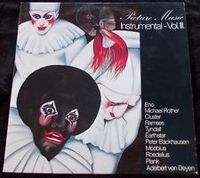
Picture Music Vol. III • Sky Records compilation • 1980
Sky Records LP sampler featuring Earthstar, Brian Eno, Hans-Joachim Roedelius,
Dieter Moebius, Conny Plank, a.o.; track: “French Skyline Suite; Movement 1: Morning Song”
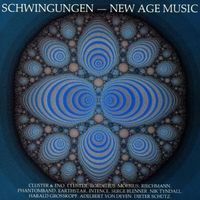
Schwingungen • Sky Records compilation • 1986
Sky Records CD sampler featuring Earthstar, Brian Eno, Cluster,
Harald Grosskopf, Adelbert Von Deyen, a.o.); track: “White Cloud”
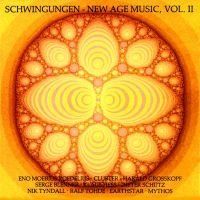
Schwingungen Vol. II • Sky Records compilation • 1986
Sky Records CD sampler featuring Earthstar, Brian Eno, Cluster,
Serge Blenner, Nik Tyndall, a.o.); track: “Latin Sirens Face The Wall”


Craig Wuest, Rixforde, Germany 1979

Dennis Rea, Sleeper the Nightlifer session at IC-Studio, Winsen an der Aller, Germany 1979
(Klaus Schulze's face can be dimly descried in reflection)

L-R: Craig Wuest, Melanie Coiro, Tim Finnegan, Daniel Zongrone, Donna Malara

L-R: Daniel Zongrone, Dennis Rea, Craig Wuest, Rixforde, Germany 1979

Dan Happ

Daniel Zongrone and Craig Wuest

Earthstar headquarters, Rixforde, West Germany 1979-80

Earthstar UNICEF benefit concert, Utica, NY 1981

Earthstar UNICEF benefit flyer; artwork by Craig Wuest

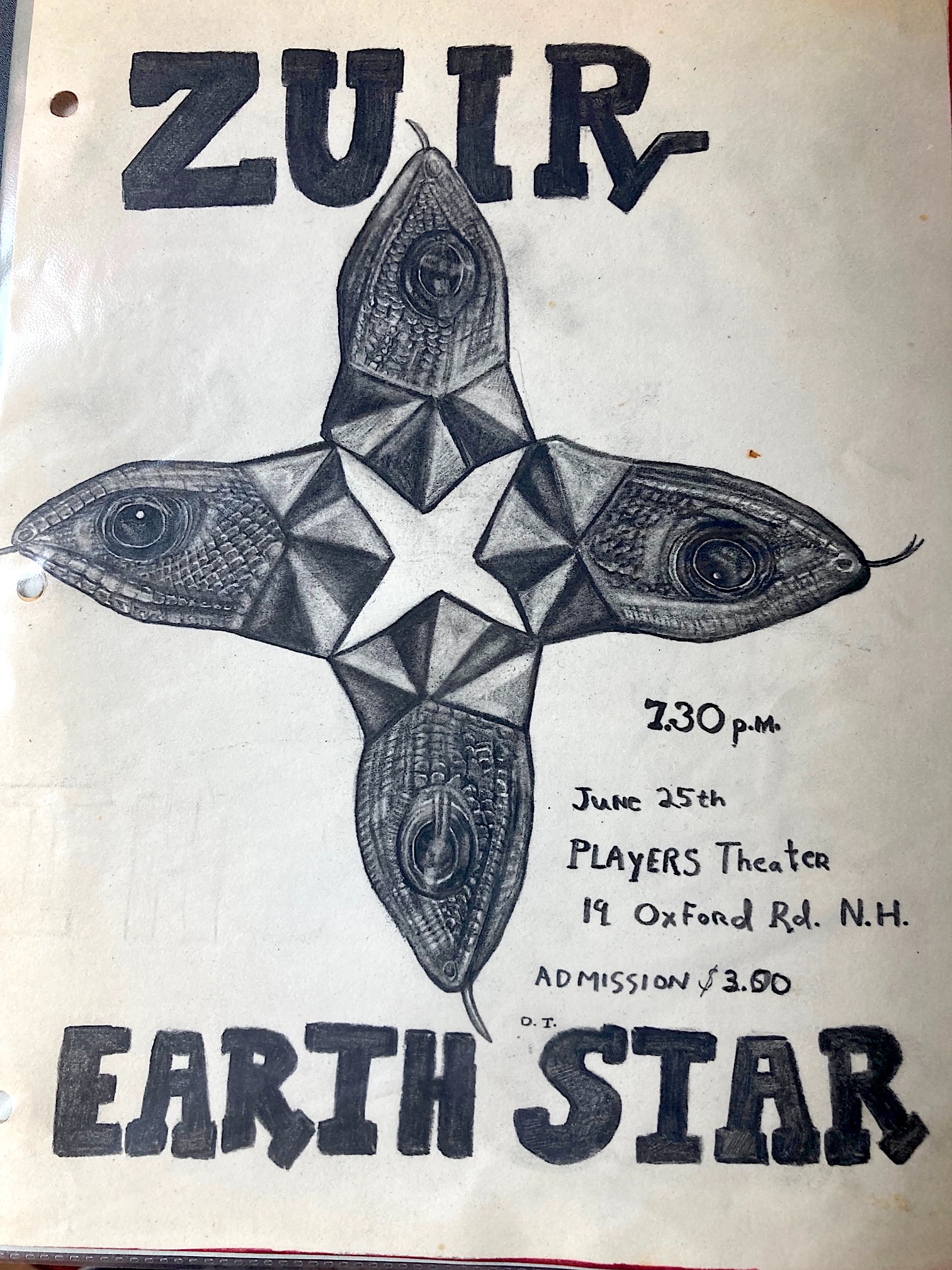
Earthstar + Zuir concert poster by Daryl Trivieri

Daniel Zongrone (obscured) and Dennis Rea
at Earthstar show in Utica, NY circa 1977


Zuir, Utica NY circa 1978: Daniel Zongrone (drums),
Dennis Rea (guitar); not pictured: Norm Peach (bass)